
The Library

Popular Topics

Popular Library Topics

Filters

Resource Type
Resource Type
More
Topics
Topics
More
Tags
Tags
More

Filters

Resource Type
Resource Type
Resource Type
More
Topics
Topics
Topics
More
Tags
Tags
Tags
More
The Whitten Ranch – Creating More with Less
This case study is an excerpt from Jim Howell's 2008 book, For the Love of Land: Global Case Studies of Grazing in Nature's Image. Following George Whitten of the San Luis valley in Colorado, Howell states "Fifteen years after taking his first Holistic Management course, he has figured out how to get by on a fraction of his former water use. He has increased the biodiversity and vigor of his irrigated meadows and hilly native rangeland to a plant mix that can thrive even in dry years."
case study tile
Surviving or Thriving in Drought
Analyzing ecological monitoring data from 1999 to 2007, Tony Malmberg of Twin Creek Ranch and Jim Howell assess how Twin Creek's drought-induced management adjustments enabled them to maintain the integrity of their ecosystem processes. Malmberg also discusses his "ah-ha" moment after hearing Howell's hypothesis that low production, brittle environments likely evolved under grazing patterns with longer (sometimes multi-year) recovery periods compared to brittle environments with higher production.
case study tile
Wool Production and Biodiversity Working Together for Tim and Karen Wright: A Case Study
Lana is a 4,000-hectare sheep property in New England Tablelands region of New South Wales, Australia. Owners introduced a Holistic Management approach in mid-1990s because of degradation of pastures and poor profitability. Results achieved include: Changed from high inputs (fertilizers, sown pastures) to low input system, which reduced fertilizer use by 70%. 100% return on investment in extra fencing within 2 years. Wool yield increased from 73-74% to 78-80%. Labor costs cut in half. Maintained healthy gross margins of $200 per ha. during 2002 drought, when area had lowest rainfall on record and neighboring farmers suffered financial stress.
case study tile
Going Beyond Best Practice in the Kalahari Bushveld Savannah: A Case study of Brahman Botswana on farm Oasis
case study tile
The Efficiency of Low Input: A Case Study
This 2010 case study follows the 9,500-hectare Farm Springbockvley in Namibia that receives an average of 250mm of annual rainfall. Between 1989 and 2010, their flerd (a combined flock of sheep and herd of cattle) grew from 250 Simmentaler cattle and 3000 Karakul sheep to about 700 Nguni cattle and 5000 Damara sheep, with an average of 15 animals per hectare. They have maintained a continually increased carrying capacity even in years where less than a third of the average rainfall was recorded.
case study tile
The Central Australian Grazing Strategies Project Working Paper Series
Etiwanda Station is a 28,000-hectare property in NSW, Australia used to produce sheep, cattle and goats. The owners adopted the Holistic Management approximately 10 years ago. Results include easier animal handling because only 2 mobs (instead of 10 previously) and movement being planned to ensure animals are close to handling facilities at right time; now in top 10% of producers in terms of profitability, compared to average or below average before changing management; improvement in quality and quantity of pastures with an increase in palatable perennial grasses; and set aside of paddocks gives 3-month buffer of feed during periods of drought.
case study tile
Soil Carbon Sequestration in U.S. Rangelands
This Environmental Defense Fund issues paper from 2009 recognized the magnitude of rangelands as a global ecosystem (up to half the land surface area of the planet) and of rangeland soils as a carbon sink suitable to mitigate global warming through proper management actions (“protocols”). It states that on the 761 million acres of rangelands in the United States, 198 million tons of atmospheric carbon dioxide (CO2) - or 3.3% of US fossil fuel emissions - could be sequestered into newly formed soil each year for 30 years. Several actions for soil improvement on rangelands are presented, the number one of which is “Conversion of abandoned and degraded cropland to grassland.” Some other recommended actions include avoiding conversion of rangeland to croplands in the first place, extensive grazing management and adjusting stocking rates.
White Paper Featured Image (1)
Working in tandem with natural variability: New paradigms for livestock grazing in Australia
This submission to the Australian House of Representatives summarizes how grazing with Holistic Management (HM), a proactive, low-tech solution, (1) provides flexible management options in the face of climatic uncertainty, and (2) enhances the resilience of the natural environment, thus leaving it better prepared for climatic variability.
White Paper Featured Image (1)
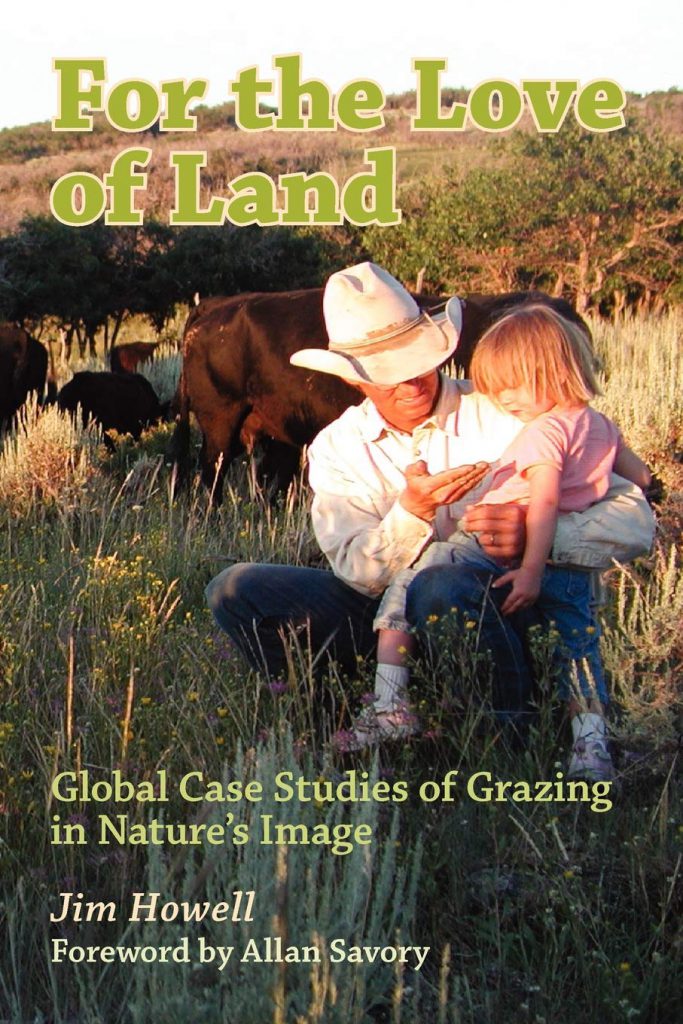
For the Love of Land
For the Love of Land describes practical, proven methods for bringing degraded landscapes--grasslands, rangelands, savannas, and farmlands--back to life through mimicking natural migratory grazing patterns with domestic livestock.
For the Love of Land book cover
N.D. Rancher Builds Biological Capital
This 2009 article in Beef Producer magazine follows Gene Goven and his 1,500-acre ranch in South Dakota, USA. Researchers have documented that grasses penetrating only 3 to 5 inches,now send down roots four to 10 times as deep. From 1982 to 2001, water infiltration in his soils increased from 0.8 to 6.2 inches/hour. His grazing season also lengthened, increasing from 150 - 180 days of grazing a year to 230 - 270 days.
case study tile

Get the Savory newsletter.

Your monthly dose of inspiration, news, events, & more

We respect your privacy and will never spam or sell your information.
You can unsubscribe at any time.